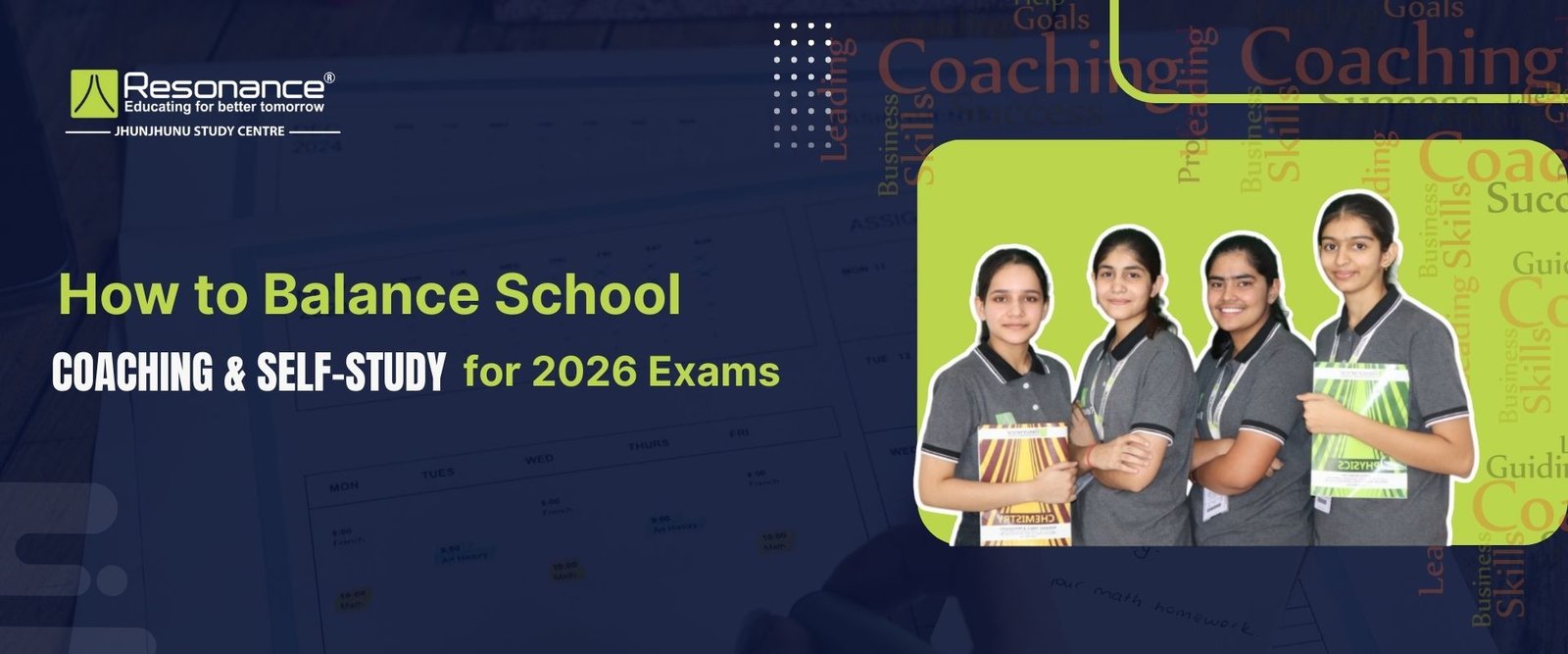
Preparing for competitive exams like IIT JEE and NEET 2026 is not just about studying more hours—it’s about studying smart, managing time wisely, and maintaining balance. One of the biggest challenges students face today is balancing school, coaching classes, and self-study together without feeling stressed or overwhelmed.
At Resonance Jhunjhunu, we interact with thousands of aspirants and parents every year. One common question we hear is:
👉 “How can students manage school, coaching, and self-study together for 2026 exams?”
This detailed guide answers that question with practical tips for preparation in 2026, realistic routines, and expert strategies that students from Class 9 to 12 can actually follow.
Why Balancing School, Coaching & Self-Study Is Important for 2026 Aspirants
Preparing for 2026 exams is a long-term journey, not a short sprint. Students who fail to balance their time often face:
- Burnout
- Poor revision
- Stress and anxiety
- Incomplete syllabus
A balanced approach ensures:
- Consistent learning
- Better concept clarity
- Enough revision time
- Mental and physical well-being
That’s why mastering time balance is one of the most important tips for preparation in 2026.
Understanding the Three Pillars of Preparation
Before learning how to balance, students must understand why each part is important.
1. Role of School in 2026 Exam Preparation
School helps in:
- Completing board syllabus
- Strengthening basics
- Improving writing skills
- Maintaining academic discipline
Ignoring school can affect board results, which still matter for eligibility and confidence.
2. Role of Coaching in Competitive Exams
Coaching provides:
- Concept clarity
- Competitive exam orientation
- Expert guidance
- Structured study plan
- Regular tests
At Resonance Jhunjhunu, coaching is designed to complement school learning, not replace it.
3. Role of Self-Study
Self-study is where real learning happens. It helps in:
- Revising concepts
- Practicing questions
- Improving speed and accuracy
- Identifying weak areas
No matter how good the coaching is, self-study decides success.
Why Students Struggle to Balance All Three
Many students face problems like:
- Too many classes
- Poor time planning
- Distractions (mobile, social media)
- No fixed routine
- Studying without strategy
The solution is not studying harder, but studying smarter using proven tips for preparation in 2026.
Step-by-Step Strategy to Balance School, Coaching & Self-Study
Step 1: Create a Realistic Daily Schedule
Your timetable should be:
- Practical
- Flexible
- Balanced
Avoid copying toppers’ routines blindly.
Sample Daily Routine for 2026 Aspirants
Morning (5:30 AM – 7:30 AM)
- Light revision
- Formula review
- Previous day’s doubts
School Hours
- Focus in class
- Note important points
- Avoid daydreaming
Afternoon (Post School)
- Rest (30–45 mins)
- Light revision
Evening (Coaching Time)
- Attend classes attentively
- Note doubts
Night (Self-Study)
- Practice questions
- Revise coaching topics
- Short notes
This routine is one of the most effective tips for preparation in 2026.
How to Manage School Studies Effectively
1. Use School Time Wisely
- Pay attention in class
- Don’t rely only on coaching
- Clarify doubts early
2. Integrate Board & Competitive Syllabus
Most concepts overlap. Learn them once, but thoroughly.
3. Focus on NCERT
NCERT is the backbone of:
- NEET
- JEE Chemistry
- Physics & Biology basics
How to Make the Most of Coaching Classes
1. Attend Every Class Seriously
Missing classes creates gaps that are hard to fill later.
2. Don’t Just Listen—Participate
Ask questions. Interaction improves understanding.
3. Revise the Same Day
Same-day revision increases retention by over 60%.
At Resonance Jhunjhunu, we always advise students to revise coaching topics within 24 hours.
Smart Self-Study Techniques for 2026 Exams
1. Quality Over Quantity
Studying 4 focused hours is better than 10 distracted hours.
2. Use Active Study Methods
- Solve questions
- Teach concepts to yourself
- Write formulas repeatedly
3. Make Short Notes
Short notes are lifesavers during revision months.
Weekly Planning: The Key to Consistency
Instead of planning daily, plan weekly goals:
- Topics to complete
- Tests to attempt
- Weak areas to revise
Weekly planning is one of the most underrated tips for preparation in 2026.
Time Management Tips for School + Coaching Students
1. Follow the 3-Slot Rule
- Slot 1: Learning (classes)
- Slot 2: Practice
- Slot 3: Revision
2. Avoid Multitasking
One subject at one time = better focus.
3. Limit Mobile Usage
Mobile distraction is the biggest enemy of 2026 aspirants.
How Resonance Jhunjhunu Helps Students Maintain Balance
At Resonance Jhunjhunu, we design our programs to support balance through:
Structured Timetables
Classes are scheduled keeping school timings in mind.
Concept-Based Teaching
Strong concepts reduce study time.
Regular Tests & Feedback
Students know exactly where they stand.
Mentorship Support
Guidance beyond academics.
Common Mistakes Students Must Avoid
- Studying without a plan
- Ignoring revision
- Skipping sleep
- Comparing with others
- Overloading themselves
Avoiding these mistakes is crucial for applying the best tips for preparation in 2026.
Balancing Mental Health with Studies
Preparation for 2026 exams is demanding, but mental health matters.
Healthy Habits to Follow
- Proper sleep
- Light exercise
- Short breaks
- Positive mindset
A healthy mind learns faster and performs better.
Role of Parents in Helping Students Balance
Parents can help by:
- Encouraging routine
- Avoiding pressure
- Supporting consistency
- Communicating with teachers
At Resonance Jhunjhunu, we believe parents and teachers must work together.
How Early Starters (Class 9–10) Should Balance Studies
Early starters should:
- Focus on basics
- Avoid pressure
- Learn with curiosity
- Follow foundation programs
Balanced preparation at this stage creates a strong base for 2026 success.
How Class 11–12 Students Can Optimize Time
Senior students should:
- Prioritize syllabus completion
- Focus on test performance
- Revise continuously
- Analyze mistakes
This structured approach is among the most effective tips for preparation in 2026.
Importance of Test Series in Time Management
Tests help students:
- Improve speed
- Learn time allocation
- Reduce exam fear
Resonance Jhunjhunu’s test series are designed to simulate real exam pressure.
How to Stay Consistent Throughout the Year
Consistency beats motivation.
Tips:
- Fixed routine
- Small daily goals
- Track progress
- Reward yourself occasionally
Why Balance Is the Secret Weapon for 2026 Exams
Students who balance:
- Learn faster
- Retain longer
- Stay confident
- Perform better
Balancing school, coaching, and self-study is not optional—it’s essential.
Conclusion
Preparing for JEE & NEET 2026 is a marathon that requires discipline, balance, and smart planning. Students who learn to balance school, coaching, and self-study early stay ahead of the competition and avoid unnecessary stress.
By following these tips for preparation in 2026, maintaining a realistic routine, and seeking expert guidance from institutes like Resonance Jhunjhunu, students can confidently move towards success.
Remember—balance today builds success tomorrow.
Frequently Asked Questions (FAQs)
Q1. How many hours should students study daily for 2026 exams?
Quality matters more than hours. 6–8 focused hours are enough.
Q2. Can school and coaching preparation be done together?
Yes, with proper integration and planning.
Q3. Is self-study more important than coaching?
Both are equally important and must go hand in hand.
Q4. How can students avoid burnout?
By maintaining balance, taking breaks, and sleeping well.
Q5. Why choose Resonance Jhunjhunu for 2026 preparation?
Because of expert faculty, structured programs, regular tests, and student-centric guidance.